

Choosing the right type of excavator is a critical decision for construction professionals, site managers, and equipment buyers. The selection impacts not only the efficiency and safety of your project but also influences access, digging speed, fuel consumption, and overall project costs. Understanding the various types of excavators and their specific applications ensures that you select the most suitable machine for your site conditions and project requirements. Whether you are managing a large-scale earthmoving operation, overseeing urban utility installations, or purchasing equipment for a fleet, knowing the strengths and limitations of each excavator type will help you optimize productivity, reduce operational risks, and control expenses.
Key Takeaways
- Crawler excavators, wheeled excavators, mini excavators, long reach excavators, dragline excavators, backhoe excavators, and hydraulic shovels each suit different ground conditions, reach needs, and job scales.
- Understanding the purposes of different types of excavators helps reduce cycle times, fuel use, and hire or purchase costs on construction sites.
- Specialist machines such as a knuckle boom excavator, suction excavators, vacuum excavators, and a spider excavator solve niche access, precision, or terrain problems.
- Key types of excavators include crawler excavators, wheeled excavators, mini excavators, long reach excavators, dragline excavators, suction/vacuum excavators, skid steer excavators, and hydraulic shovels.
- For complex requirements, our excavator solutions can help match or engineer the right configuration.
What Is An Excavator, and Why Does the Type Matter on Site
An excavator is construction equipment with a rotating platform, rotating cab, boom, stick, bucket, and undercarriage on tracks or wheels. Most modern hydraulic excavators use hydraulic power mechanisms to create digging movement, digging force, lifting, swing, and travel.
“Different types of excavators” refers to machines built for specific tasks, while “types of excavation” includes digging trenches, bulk earthmoving, deep trenching, dredging, demolition projects, site preparation, road building, digging pools, drainage systems, utility installation, deep digging, underwater excavation, and material handling. When choosing an excavator, consider the type of work you will be performing, as different jobs have specific needs, such as suctioning or long horizontal reach. Jobsite conditions play a significant role in selecting an excavator, as different models vary in their ability to navigate rough terrain or fit into tight spaces.
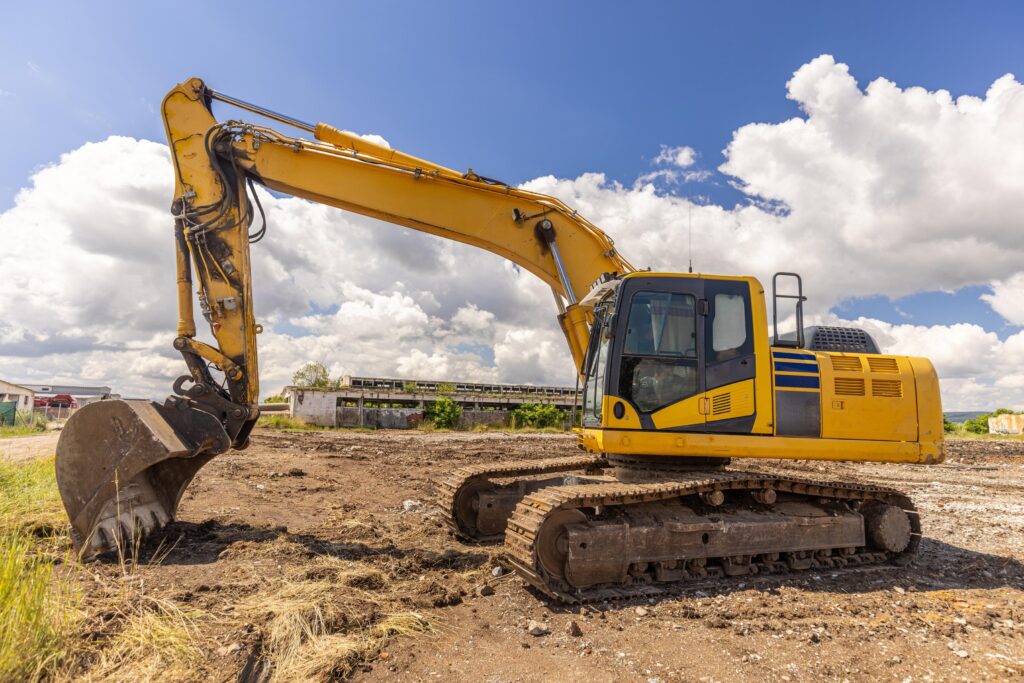
Crawler Excavators (Standard Excavators)
Crawler excavators, also known as standard excavators, run on tracks and are optimal for heavy-duty construction jobs, providing greater stability and flexibility on uneven terrain. These tracked excavators use steel or rubber movable tracks and a chain-and-wheel system to distribute weight, providing greater balance and stability on uneven ground, making them suitable for grading hilly areas and landscaping uneven terrain.
They are used for foundations, basements, loading trucks, quarry work, tree stumps, heavy lifting, and large excavation projects. A crawler excavator can range from a smaller excavator around 8–10 tonnes to large excavators over 80–90 tonnes for mining operations and major earthworks. Their limits are slow travel, transport by low loader, and possible damage to finished surfaces.
Common excavator attachments include:
- Buckets
- Rock buckets
- Hydraulic breakers
- Pulverisers
- Shears
- Thumbs
- Grapples
- Augers
- Clamps
- Quick couplers
- Other specialised attachments
Mini And Compact Excavators
Mini excavators and compact excavators are compact versions of standard excavators, designed for jobs in limited spaces, and typically weigh between 0.75 tons and 10 tons. Mini excavators are designed to minimise ground impact and fit through crowded, narrow sites, making them ideal for delicate work in urban environments.
They suit residential landscaping, small service trenches, courtyards, indoor work, and narrow streets. Reduced or zero tail swing, rubber tracks, and compact bodies let them work in tight spaces where other excavators cannot. The trade-off is lower lift capacity, shorter reach, and shallower digging depth or maximum digging depth than larger machines.
Wheeled Excavators
Wheeled excavators mount the upper structure on tyres rather than tracks and are often called “rubber ducks” in the UK. Wheeled excavators offer greater mobility and speed on paved surfaces compared to crawler excavators, making them useful on roads, yards, ports, and industrial job sites.
They handle highway maintenance, street drainage, utility installation, and hardstand work with less surface damage. Outriggers and a dozer blade improve stability, but they are weaker than crawler excavators on muddy, steep, or very rough terrain.
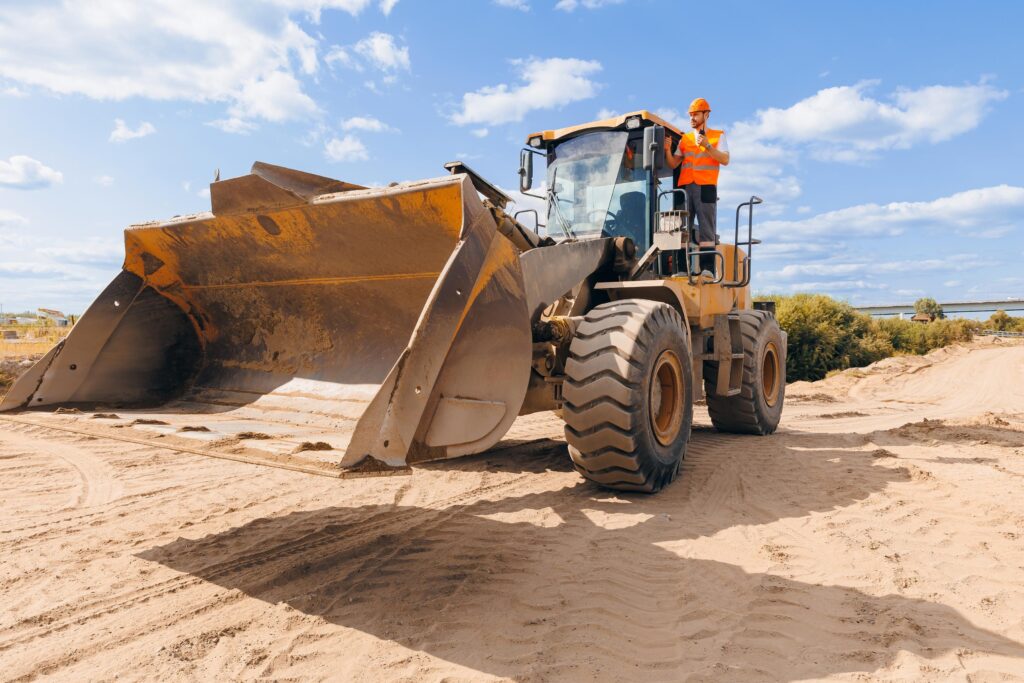
Long Reach Excavators
A long-reach excavator is built with a longer arm and boom to work safely at a distance. Long-reach excavators are equipped with a longer arm and boom, allowing them to reach distances of up to 100 feet, making them ideal for tasks that require working at significant depths or distances.
Long-reach excavators are commonly used in dredging operations, underwater excavation, and demolition of tall buildings, allowing operators to work at a significant distance from the work area. They also suit quay walls, deep basements, and unstable banks. The phrase excavator long reach excavators usually refers to crawler-based machines with engineered fronts. Their limits are reduced lifting capacity at full reach, slower cycles, transport complexity, and attachment sensitivity.
Backhoe Excavators (Backhoe Loaders)
Backhoe excavators combine a rear digging arm with a front loader bucket. They are versatile machines for farms, estates, rural roads, small foundations, backfilling, debris removal, and removing debris after light work.
Compared with a dedicated crawler excavator, the rear arm has a limited slew arc and lower digging power, but road speed and dual-purpose loading make it valuable. Modern backhoe excavators can accept breakers, augers, thumbs, and compact buckets for various tasks.
Dragline Excavators
Dragline excavators use a lattice boom, wire ropes, and a large bucket attached to a crane-like system via cables for large-scale excavation. A dragline system uses a hoist rope, a hoist rope system, a drag rope, and sometimes a hoist coupler arrangement; the dragline pulls the bucket toward the machine rather than using a normal hydraulic stick.
Dragline excavators are used for surface mining, strip mining overburden, canals, harbours, reservoirs, and large-scale excavation. Their strengths are long reach, high production, and working over unstable or wet ground. Their weaknesses are huge cost, large setup areas, and poor suitability for confined urban work.
Hydraulic Shovels And Large Excavators
Hydraulic shovels are large, heavy-duty excavators designed for mining and large-scale earthmoving projects, capable of moving vast amounts of material quickly. They sit above normal excavator types and are common in open-pit mines, heavy quarrying, ore loading, and major cuttings.
Some hydraulic shovels use forward-facing buckets; others use backhoe-style arrangements. The size and capacity of the excavator are crucial factors; selecting the right size ensures that the job is completed efficiently and effectively. Standard large excavators, often 45–90 tonnes, bridge the gap between construction crawlers and mining shovels.
Specialised Excavator Types For Challenging Conditions
Beyond mainstream machines, specialist designs handle challenging terrain and precision work.
Walking and Spider Excavators
Walking excavators, including the spider excavator, use adjustable legs for slopes, riverbanks, flood defence, forestry, and post-landslide stabilisation.
Amphibious Excavators
Amphibious machines use pontoon undercarriages for wetlands and shallow dredging.
Suction/Vacuum Excavators
Suction excavators, also known as vacuum excavators, use powerful suction to remove soil and debris, making them ideal for delicate jobs around underground utilities. Suction excavators use powerful suction and water jets to loosen soil, allowing for precise excavation around underground utilities with minimal disruption to the surrounding area. Suction excavators, also known as vacuum excavators, utilise a suction pipe and water jets to remove soil and debris with minimal disruption, making them ideal for delicate underground applications. Primarily utilised in urban settings for utility tasks, suction excavators excel at repairing or installing underground pipes, cables, and gas lines due to their accuracy and minimal disturbance to the surrounding environment.
Knuckle Boom Excavators And High-Manoeuvrability Options
A knuckle boom excavator has an extra boom joint, helping the arm fold around obstacles and work close to the machine. These excavators feature strong articulation for demolition in constrained areas, scrap sorting, recycling plants, precision excavation, and controlled structural crumbling.
Skid steer excavators and compact swing-boom machines also suit confined construction site conditions. A skid steer can manoeuvre tightly; skid steer excavators, sometimes grouped with steer excavators, gain more value when paired with grabs, sorting grapples, and compact buckets.

Excavator Attachments And Their Role In Different Types Of Excavation
Excavator attachments often change productivity as much as the base machine. Excavator versatility is often increased by switching attachments such as buckets, hydraulic breakers, grapples, and augers. Excavators use a variety of hydraulic attachments that serve different purposes, including buckets, augers, breakers, clamps, and quick couplers.
Buckets
Buckets are the most common attachments seen on excavators, designed for digging and scooping capabilities, and come in various types, such as:
- Ditching buckets
- Trenching buckets
- Rock buckets (for abrasive ground)
- Grading buckets (for shaping slopes)
- Mud buckets (for dredging)
Augers
Augers, when attached to excavators, allow operators to bore into the ground, with sizes ranging from 4 inches to 50 inches in diameter and capable of drilling deep holes up to 32 feet.
Other Attachments
Other common attachments include:
- Hydraulic breakers
- Grapples
- Shears
- Thumbs
- Clamps
- Quick couplers
- Pulverisers
Correct hydraulic circuits, quick couplers, and attachment weights are essential for safe work.
Choosing Between Excavator Types For Your Construction Site
To choose the best excavator, assess access, working envelope, digging depth, horizontal reach, soil, lifting needs, transport, operator skill, and whether work is above, at, or below water. A mini excavator plus suction unit suits inner-city utilities; a crawler excavator suits bulk cut-and-fill; a long reach excavator suits riverbank stabilisation; dragline excavators suit major dredging or mining.
For deep pile driving, demolition, heavy earthmoving, or delicate utility exposure, the right excavator is the one sized for the actual production and safety requirements, not simply the biggest available. If you need help specifying machines, attachments, or engineered fronts, explore our excavator solutions.
How We Can Help With Specialist Excavators
How we can help is simple: we focus on engineered excavator solutions rather than generic plant hire. We can support long-reach excavators, demolition configurations, bespoke dredging fronts, tailored boom designs, and knuckle boom excavators for non-standard job sites.
We evaluate the purposes of different types of excavators against reach, depth, access, load, stability, and ground conditions, then recommend the most productive configuration. Explore our excavator solutions early to avoid under-specifying, over-specifying, or compromising safety and whole-life cost.
Frequently Asked Questions About Excavator Types
A crawler excavator runs on tracks for traction and stability on soft, uneven, or sloping ground. A wheeled excavator uses tyres for faster travel and less pavement damage, making it better for roadworks and urban utility projects.
Choose a long-reach excavator when the work area is distant from a safe machine position, such as dredging from a bank, excavating deep basements, or demolishing high structures. If a standard boom can reach safely, a conventional crawler may be faster and stronger.
Usually, no. Dragline excavators are efficient on mines, quarries, and major dredging works, but they are oversized and costly for most building projects. Crawlers, long-reach machines, or hydraulic shovels are more practical for most civil sites.
Start with the work programme: trenching, breaking concrete, sorting waste, drilling, lifting, grading, or dredging. Then match each task to a bucket, breaker, grapple, auger, shear, or grading tool, checking hydraulics and lifting capacity.
A mid-sized crawler with good attachments can cover many jobs, but no single machine is optimal for every condition. A crawler plus mini excavator, or a long reach machine plus standard excavator, is often more efficient than forcing one machine to do everything.