

This guide is for contractors, fleet managers, and operators seeking to maximise the lifespan of their excavators. It covers daily maintenance, operator best practices, and when to consider professional upgrades. Maximising excavator lifespan reduces ownership costs and increases return on investment. This guide explains how to extend the excavator’s lifespan through disciplined daily checks, clean fluids, correct operation, and planned upgrades. Proper maintenance can extend the lifespan of construction equipment significantly. Extending the lifespan of an excavator requires a combination of consistent preventive maintenance and skilled operation techniques. Preventive maintenance is critical to reduce avoidable failures and prolong equipment life.
Extending the excavator’s lifespan requires both preventive maintenance and skilled operation techniques. By combining regular inspections, proper lubrication, and operator training with timely upgrades and professional support, you can ensure your equipment delivers reliable performance for years to come.
Disciplined daily checks, clean fluids, and correct operation can add 5,000 to 15,000 or more hours to an excavator’s life, with some fleets achieving 30 to 40 per cent longer operational periods. The hydraulic systems, undercarriage components, and engine are the three highest cost and failure drivers, with the undercarriage alone representing 40 to 50 per cent of lifetime maintenance spend. The undercarriage includes rollers, idlers, sprockets, track chains, and track shoes, contributing to an excavator’s overall mobility and strength. Tailored preventive maintenance based on real job conditions, rather than just handbook hours, can cut unplanned downtime by up to 70 per cent and significantly reduce repair bills. Additionally, bespoke excavator modifications, custom excavator equipment, and specialist excavator engineering extend equipment lifespan when implemented as planned upgrades rather than ad-hoc fixes. Operator training, detailed records, and timely professional support through excavator retrofit solutions prove as valuable as any mechanical intervention.
Why Excavator Lifespan Matters
New 20–30 tonne crawler excavators in the UK market typically cost £120,000–£250,000. For contractors working on housing developments, highways, rail infrastructure, and utilities projects, squeezing every extra operating hour from this heavy equipment is critical to profitability.
With structured excavator maintenance, many fleets see machines working reliably beyond 15,000–20,000 hours. Neglected machines? They can be effectively worn out before 8,000 hours. The difference represents tens of thousands of pounds in lost value plus hidden costs, including lost day rates exceeding £1,000 daily, penalties on UK infrastructure contracts, and disruption to labour and haulage schedules.
This guide covers how to extend excavator lifespan through daily inspections, hydraulic care, undercarriage protection, engine and cooling maintenance, electrical system attention, proper lubrication, operator technique, and long-term planning, including excavator upgrades and specialist excavator engineering solutions. The guidance applies to common crawler excavators from 5 to 50 tonnes operating across UK job sites.
Start with Daily and Weekly Checks
A 10–15 minute routine at the start and end of each shift is the single fastest way to achieve optimal performance and extend machine life. Low fluids alone cause 20-30% of premature failure in construction equipment.
Daily Walk-Around Points
- Check for leaks under the machine (hydraulic oil, engine oil)
- Inspect for damage to hydraulic hoses and boom structure
- Look for missing or loose connections and bolts
- Measure excessive track sag (compare against handbook specs)
- Examine bucket teeth wear and quick coupler integrity
Fluid and Filter Checks
- Check engine oil level via dipstick
- Inspect hydraulic oil sight glass
- Verify coolant levels (50/50 mix)
- Check fuel tank and washer bottle
- Visually inspect air filters for contamination
Daily Cab Check
- Monitor warning lights on start-up
- Listen for unusual noises
- Test for sluggish controls
- Watch for excessive smoke
- Note abnormal vibration
- Verify heater/AC function
Weekly Additions
- Adjust track tension according to operating conditions
- Clean the undercarriage of packed mud and stones
- Grease all pins and bushes (boom, dipper, bucket, slew)
- Inspect the slew ring and slew gear area for play or metal shavings
Record every check in a logbook or digital app. This service history supports resale value by 10-20% and helps identify patterns in recurring issues before they cause costly repairs.
With daily and weekly checks in place, the next step is to focus on the hydraulic system, the heart of your excavator.
Protect the Hydraulic System – The Heart of the Excavator
The hydraulic system converts mechanical energy into hydraulic energy using components like pumps, valves, cylinders, and motors. Hydraulic pumps, valves, and motors rank among the most expensive hydraulic components on any excavator. A catastrophic failure can easily cost £8,000–£20,000 in parts and labour, plus weeks of unplanned downtime.
Maintaining System Efficiency
- Use hydraulic oil at the correct specification (typically ISO VG 46 for UK climates)
- Change hydraulic filters at or before manufacturer intervals
- Shorten service intervals in harsh conditions like demolition dust or quarry work
- Clean oil prevents approximately 50% of hydraulic issues
Warning Signs of Hydraulic Distress
- Slow cycle times or reduced performance
- Jerky movements during operation
- Unusual whining or cavitation noise from the pump
- Hydraulic tank running hot (above 60°C)
- Spongy controls indicating air ingress
Periodic oil sampling every 500–1,000 hours reveals contamination, water ingress, or wear metals early. This data enables targeted excavator retrofit solutions or component overhauls before total failure occurs.
Hose Protection Essentials
- Avoid rubbing points that cause unnecessary wear
- Fit guards where hoses pass over sharp edges
- Replace any hose showing blisters, exposed wire, or leaks immediately
In cold weather, allow proper warm-up of hydraulics, gentle cycling of boom, dipper, and bucket at low RPM for several minutes, which prevents seal damage and hose cracking in extreme temperatures.
Once the hydraulic system is protected, attention should shift to the undercarriage, which is the largest wear cost on tracked excavators.
Look After the Undercarriage – Your Biggest Wear Cost
For tracked excavators, undercarriage components can represent 40–50% of lifetime maintenance spend. The undercarriage includes rollers, idlers, sprockets, track chains, and track shoes, contributing to an excavator’s overall mobility and strength. Correct care adds 2,000–3,000 hours before major rebuild, a significant extension of service life.
Key Undercarriage Parts
- Track chains (pins and bushes)
- Track shoes or pads
- Top and bottom rollers
- Idlers and sprockets
- Track tensioning system
Daily Cleaning Routine
- Remove mud, clay, chalk, and stones from between rollers and tracks
- Packing with abrasive materials accelerates wear and causes derailing
- This five-minute habit delivers substantial returns
Track Tension Management
- Measure track sag on level ground, typically 30-40mm for a 20-tonne machine
- Loosen tension in very muddy ground conditions to prevent excessive wear from over-tight running
- Maintain proper tension for smooth operation
Signs of Wear Requiring Attention
- Hooked sprocket teeth
- Sharp or broken track pads
- Cracked rollers
- Uneven wear patterns suggesting aggressive operation or misalignment
Operating Habits That Save Money
- Minimise high-speed tracking
- Avoid sharp turns on asphalt or concrete
- Never use travel motors to “bulldoze” material uphill
Consider planned replacement over piecemeal repairs when wear becomes significant. Custom excavator equipment, such as heavy-duty rock pads or specialist track guards, extends life 20-50% on abrasive UK sites.
With the undercarriage protected, attention should turn to the engine and cooling systems to ensure reliable power delivery.
Attachments, Lubrication and Operating Technique
Attachments and daily lubrication directly affect both productivity and the structural life of the boom, dipper, and slew ring.
Attachment Management
- Regularly inspect buckets, quick couplers, and breakers for cracks, worn pins, and loose bolts
- Match the tool to the carrier to avoid oversized breakers or over-heavy buckets on smaller machines
- Never pry or hammer with standard buckets
Greasing Regime for Proper Lubrication
- Use the correct grease grade (typically NLGI 2) for UK temperatures
- Both over-greasing (squeezes seals, attracts dirt) and under-greasing (causes metal surfaces to contact, ovaling pin bores) create problems
- Grease all pins and bushes as per OEM recommendations
Operator Technique Matters
- Smooth control movements prevent shock loading
- Avoid sudden stops at cylinder ends
- Proper warm-up and cool-down cycles
- Train operators on new capabilities when adding custom excavator equipment like tilt-rotators
Poorly trained operators using specialist attachments can accelerate wear by 20-30%.
With attachments and lubrication addressed, the next focus is on the engine, cooling system, and filters to maintain the power unit’s health.
Engine, Cooling System and Filters – Keeping the Power Unit Healthy
The excavator’s engine, cooling system, and filters form the life support of your machine. Modern Stage V engines used across UK fleets are particularly sensitive to poor fuel quality and neglected filter replacements.
Engine Oil and Filter Maintenance
- Timely oil and filter changes (typically 500-hour intervals, reduced for severe duty)
- Regular inspections of belts and mounts
- Monitor exhaust smoke colour (black indicates rich fuel, white suggests coolant issues)
Fuel System Protection
- Drain water separators regularly
- Use quality diesel from reputable UK suppliers
- Replace fuel filters before restriction stresses injectors and high-pressure pumps
Cooling Package Maintenance
- Keep radiators, oil coolers, and charge-air coolers free from dust using compressed air or low-pressure water
- Clean in the opposite direction to the airflow
- Use the correct coolant type and mix for UK conditions
- Check for leaks in hoses and clamps
- Watch for overheating under sustained heavy loads in extreme heat
Air and Cabin Filter Attention
- Air filters are cheap insurance against premature wear
- In dusty conditions, crushing plants, dry demolition work during summer, inspect daily and replace more often than the handbook intervals suggest
- Using OEM filters or quality equivalents ensures optimal performance
- Cabin filters protect both electronics and operators, keeping cab air clean and operators alert
With the engine and cooling system maintained, the next area to address is the electrical system, electronics, and telematics for reliable machine operation.
Electrical System, Electronics and Telematics
Modern excavators rely on CAN-bus wiring, sensors, ECUs, and displays. Electrical reliability now matches mechanical health in importance for performance and longevity.
Electrical Component Protection
- Keep battery terminals tight and clean
- Secure looms away from sharp edges
- Avoid high-pressure washing directly at electrical boxes or connectors
Common Failure Causes
- Vibration loosening connectors
- Water ingress into junction boxes
- Rodent damage to looms on parked machines
- Amateur wiring of additional lights or cameras creates unnecessary strain
Regular Inspections
- Conduct quarterly inspections to spot chafed wires, loose earth points, cracked relays, and corroded plugs before they cause intermittent faults
Telematics for Fleet Management
- Remote monitoring through OEM or aftermarket systems tracks engine hours, fuel burn, idle time, warning codes, and service intervals
- This data supports scheduled maintenance planning and helps extend equipment lifespan by forecasting issues
When implementing bespoke excavator modifications, ensure proper integration with existing electrical architecture. This includes correct fusing and load capacity calculations to avoid overloading circuits.
With the electrical system managed, planning, upgrades, and professional support become the next priorities for long-term excavator health.
Planning, Upgrades and When to Use Professional Support
Long excavator lifespan is ultimately a management decision. Planned regular maintenance, scheduled upgrades, and timely professional inspections all contribute.
Building a Maintenance System
- Combine OEM schedules with site-specific adjustments
- Plan seasonal checks (e.g., before winter 2026–27)
- Schedule legal inspections as required
- Use telematics data to forecast when major services fall due
Documentation Value
- Maintain digital service records, parts history, and notes on recurring issues
- This guides future excavator upgrades and retrofit decisions while supporting resale value
When Professional Help is Essential
- Major hydraulic leaks or pump rebuilds
- Complex electrical faults
- Structural cracks in the boom or chassis
- After serious impacts or rollovers
Excavator Retrofit Solutions
Instead of replacing machines, consider upgrading lighting, cameras, guarding, control systems, or emissions packages. These appropriate measures extend the useful life at a fraction of new machine costs.
Bespoke excavator modifications and specialist excavator engineering can adapt older machines to new tasks, adding auxiliary circuits for tilt-rotators or fitting heavy-duty belly guards for quarry work while renewing key areas.
Build long-term relationships with trusted engineers and parts suppliers who understand your fleet and can advise on cost-effective life-extension strategies.
Conclusion: Turning Excavator Care into Long-Term Value
Extending excavator lifespan comes down to consistent habits: daily inspections, clean fluids, proper care through correct lubrication, and respectful operation. These fundamentals require discipline rather than complexity.
Targeted investment in undercarriage, hydraulics, and engine care prevents catastrophic failure and keeps machines working productively for years beyond finance periods. Excavator upgrades, retrofit solutions, and custom excavator equipment, when planned and engineered properly, modernise existing assets instead of forcing premature replacement.
Proper maintenance can extend the lifespan of construction equipment significantly. Extending the lifespan of an excavator requires a combination of consistent preventive maintenance and skilled operation techniques. Preventive maintenance is critical to reduce avoidable failures and prolong equipment life.
Review your current maintenance routines this month. Identify 2–3 immediate actions: perhaps implementing oil sampling, adjusting greasing frequency for your operating conditions, or scheduling that overdue undercarriage inspection. Small changes compound into significant savings across your fleet’s service life.
Frequently Asked Questions
Many UK fleets expect 10,000–12,000 hours as a baseline life for heavy machinery. With disciplined preventive maintenance, timely component overhauls, and occasional excavator retrofits, achieving 15,000–20,000 hours or more on mainstream brands is realistic. Work type (heavy rock excavation versus utility trenching), climate, operator skill, and maintenance quality all significantly influence actual lifespan.
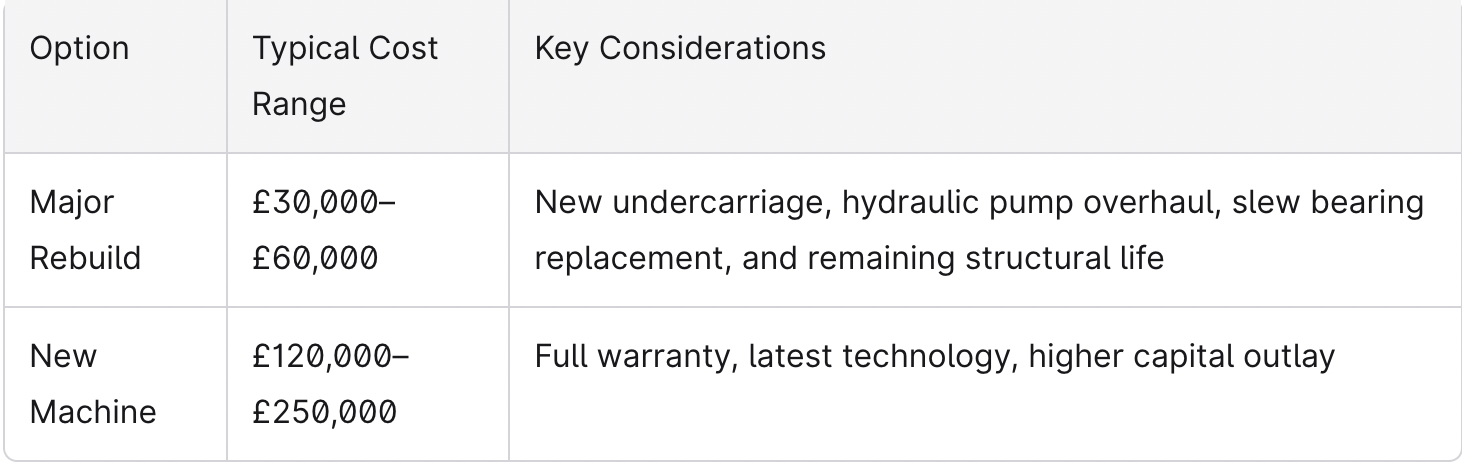
For well-built 20–30 tonne machines with sound structures, a major mid-life rebuild plus selected excavator upgrades often proves more cost-effective than replacement, particularly when the machine is already familiar to operators and operational costs are well understood.
Many UK contractors grease critical pins daily or every 10 working hours, increasing frequency in wet, abrasive, or high-impact conditions such as quarrying and demolition. Follow the OEM lubrication chart, but use visual inspection of pins and bushes (looking for dry, rusty, or noisy joints) as the best guide to whether intervals should be shortened.
Well-engineered bespoke modifications and custom excavator equipment, designed and installed by specialist excavator engineering firms, generally extend useful life by adapting machines to new roles safely. However, un-engineered add-ons, oversized booms, excessive counterweights, or poorly integrated hydraulic circuits can overstress structures and systems, actually reducing lifespan and load capacity.
Plan major services, undercarriage work, and retrofit projects for periods of lower utilisation between phases of housing developments or during planned shutdowns on infrastructure jobs. Use telematics and hour meters to forecast when significant services fall due, then adjust machine assignments so excavators can be released for workshop time without impacting programme dates. This ensures peak performance when machines are needed most.