

Induction hardening is a method that uses electromagnetic induction to heat and then quickly cool metal surfaces, increasing their hardness. This treatment is ideal for parts needing high wear resistance, like gears and shafts, while keeping the core tough. The article will explain what induction hardening is, how it works, its benefits, and common applications.
Key Takeaways
- Induction hardening is a precise surface heat treatment that selectively hardens metal components, enhancing their wear resistance and fatigue strength while preserving a soft core.
- The process involves rapid heating using electromagnetic induction, followed by quenching to lock in the desired microstructure, allowing for higher hardness levels compared to traditional methods.
- Recent innovations, such as CNC machinery, have improved the precision and efficiency of induction hardening, enabling better control over hardening depths and accommodating complex geometries.
Understanding Induction Hardening

Induction hardening is a surface heat treatment process that leverages the principles of electromagnetic induction to heat specific areas of a metal part. This process is primarily used to selectively harden areas of a component or assembly, enhancing their wear resistance and fatigue strength. The core idea is to create a hardened surface layer while maintaining a soft, ductile core, ensuring the part can endure high stresses without fracturing.
The heat in induction hardening is generated through eddy currents and hysteresis losses. When an alternating current flows through a copper induction coil, it creates an alternating magnetic field that induces electric currents (eddy currents) in the metal part. These currents generate heat due to the metal’s electrical resistance, causing the surface layer to heat up rapidly. The depth of this hardened layer, or hardening depth, can be precisely controlled by adjusting the frequency and power of the current.
This induction heating process allows for highly localised treatment, which is particularly beneficial for parts with intricate geometries or specific areas that require hardening. These principles highlight the precision and efficiency inherent in the induction hardening process.
The Induction Hardening Process
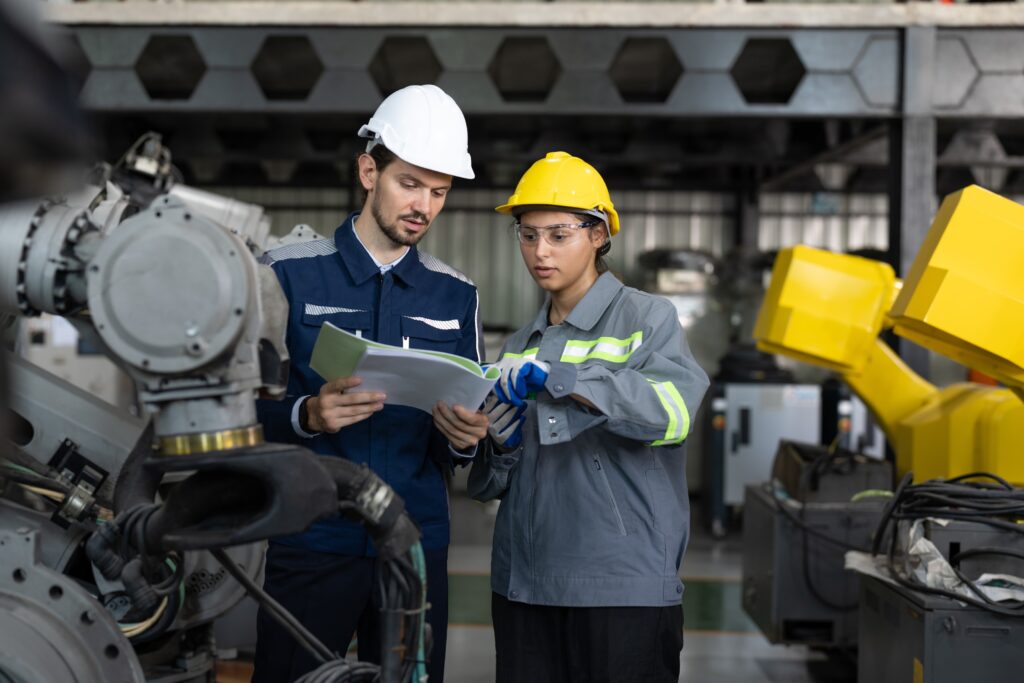
Induction hardening enhances metal hardness through rapid heating followed by quenching, showcasing modern engineering at its best. This process consists of two main stages: induction heating and quenching, with tempering as an optional but significant step.
In the induction heating stage:
- Metal parts inside a copper coil are heated rapidly and uniformly by an electromagnetic field generated by an alternating current.
- Only the surface layer reaches the desired temperature.
- The core remains relatively cool and unchanged due to the rapid heating.
Once the surface layer is sufficiently heated, the part undergoes quenching. This involves rapidly cooling the heated metal, typically using water, oil, or a polymer solution, to lock in the desired microstructure. This localised rapid cooling can achieve higher hardness levels compared to traditional through-hardening methods, making induction hardening a superior alternative for many applications.
Induction Heating
The core principle behind the induction heating process is electromagnetic induction. An alternating magnetic field generated by an alternating current through a copper induction coil induces eddy currents in the metal part, causing it to heat up from electrical resistance due to the electric current.
The process typically involves heating components to a temperature within or above the transformation range. The rapid heating achieved through this process is highly efficient, making it ideal for industrial applications where time and precision are critical. Unlike traditional contact heating processes, induction heating is a non-contact heating process, ensuring uniform heat distribution and reducing the risk of overheating or hot spots. This contributes to overall heating efficiency.
The induction heating systems used in this process are designed to provide precise control over the heating parameters, allowing for consistent and repeatable results on various surfaces. Such control is crucial for achieving the desired hardness levels and ensuring the quality of the hardened surface layer.
Quenching
Quenching is a pivotal phase in induction hardening. After the metal part is heated to the desired temperature, it must be rapidly cooled to lock in the hardened microstructure and maintain the flow of heat. This is typically achieved by submerging the part in liquids like water or oil, which absorb the heat quickly and prevent it from penetrating deeper into the core, ensuring it is quenched effectively, resulting in a quenched metal that transforms.
Immediate quenching after heating ensures effective surface hardening by:
- Inducing a martensitic transformation in the surface layer through rapid cooling, which significantly increases hardness and wear resistance.
- Requiring precise control of the quenching process to achieve the desired hardening depth.
- Avoiding issues such as distortion or cracking by managing the quenching parameters carefully.
Various quenching methods can be employed, including directed sprays or full immersion. Each method is chosen based on the specific requirements of the part being treated. This flexibility ensures that the induction hardening process can be tailored to a wide range of applications.
Tempering (if needed)
Tempering is often performed after the induction hardening process to decrease the brittleness of the tempered metal while improving its durability. This step involves reheating the hardened metal to a lower temperature, which reduces internal stresses and enhances toughness.
After quenching, the metal part may be too brittle for practical use. Tempering modifies the microstructure, making the material more ductile without significantly sacrificing hardness. The heating and quenching process limits distortion primarily to the surface, ensuring minimal overall changes in shape.
Carefully controlling the tempering temperature and duration achieves the desired balance between hardness and toughness. This versatility makes the induction hardening process suitable for a wide range of applications, from gears and shafts to intricate components.
Key Materials for Induction Hardening

Induction hardening primarily uses carbon and alloy steels to enhance surface hardness and strength. Key points include:
- Medium-carbon steels, such as 1045, are frequently utilised due to their balanced properties.
- These steels have sufficient carbon content to achieve the desired hardness levels.
- They maintain good toughness, making them ideal for a variety of applications.
High-carbon steels, with carbon content ranging from 0.60% to 1.00%, achieve exceptional hardness after treatment. These lower-carbon materials are often used in applications where maximum wear resistance is required. Additionally, chromium-molybdenum and nickel-chromium steels are favoured for their hardenability and toughness, making them suitable for demanding environments. Metals like these are essential in various industrial applications.
Certain grades of cast irons, especially ductile cast iron, can also undergo effective induction hardening when managed properly. These materials are selected based on their ability to achieve the required hardness and performance characteristics. Selecting suitable materials is crucial for achieving optimal results in the induction hardening process.
Benefits of Induction Hardening

Induction hardening significantly increases wear resistance, ideal for components under high stress and heavy loads. This process is extensively used in industries like automotive and aerospace, where critical components must withstand extreme conditions. Selective hardening of specific areas ensures parts endure high wear while maintaining structural integrity and residual compressive stress.
One of the key advantages of induction hardening is the minimal distortion it causes during the hardening process. Key points include:
- Maintaining precise dimensions is essential in applications like gears, crankshafts, and other high-precision parts.
- The hardening process can achieve a hardness range of 56 – 65 HRC.
- This hardness enhances performance and extends the lifespan of treated components.
Another significant benefit is the reduction in overall processing time. Rapid heating and quenching in induction hardening allow for faster production cycles compared to traditional methods. This efficiency makes induction hardening a cost-effective solution for enhancing the performance of metal parts.
Applications of Induction Hardening

It primarily enhances the surface hardness of ferrous components while preserving the core’s properties. This is ideal for parts requiring a tough exterior to resist wear and a ductile interior to absorb shocks. Typical applications include:
- Gears
- Shafts
- Bearings
- Other components that experience high levels of stress and wear include gear teeth.
The process is particularly effective for intricate components, allowing for selective hardening of specific areas. This ensures only the critical regions are hardened, enhancing wear resistance without compromising structural integrity. The ability to precisely control the hardening depth, case depth, and hardness level makes induction hardening suitable for a wide range of industrial applications.
However, induction hardening can produce greater distortion than ion or gas nitriding, especially when applied to larger areas. Despite this, the benefits often outweigh the drawbacks, making induction hardening a preferred choice for many applications.
Challenges and Limitations of Induction Hardening
Despite its numerous benefits, induction hardening presents several challenges and limitations. One of the primary concerns is the higher likelihood of cracking due to the rapid heating and cooling processes. This is particularly a problem at hot spots on features or edges of the parts. Managing these risks requires precise control over the heating and quenching phases.
Material limitations significantly impact the effectiveness of induction hardening. Steels with low carbon content, such as 1008, 1010, 12L14, and 1117, are not typically suitable for induction hardening due to their limited hardness increase. The cost of custom induction coils for specific geometries can be substantial, impacting the practicality of low-volume projects.
Despite these challenges, the benefits, such as minimal distortion and selective hardening, make induction hardening valuable for enhancing metal parts. Recognising these limitations is crucial for effectively implementing induction hardening in various applications.
Recent Innovations in Induction Hardening at Kocurek Engineering
Kocurek Engineering has recently invested in the design and installation of a state-of-the-art CNC Induction Hardening machine. This advanced equipment significantly enhances the precision and efficiency of the induction hardening process. The new machine provides highly accurate control of the heating and quenching phases, ensuring consistent, high-quality results.
This innovation allows Kocurek Engineering to offer enhanced services, including hardening complex geometries and achieving precise hardening depths. The CNC capabilities reduce human error and increase overall process reliability. For more information, visit Kocurek Engineering’s page here.
The investment in this cutting-edge technology underscores Kocurek Engineering’s commitment to providing top-tier services to its clients. By leveraging the latest advancements in induction hardening equipment, they can meet the evolving needs of various industries, from automotive to heavy machinery.
Summary
Induction hardening is a powerful surface heat treatment process that enhances the wear resistance and durability of metal components. By selectively hardening specific areas while maintaining a soft core, this process achieves a perfect balance between strength and flexibility. The induction heating process, followed by quenching and optionally tempering, ensures precise control over the hardening depth and hardness level.
Understanding the key materials suitable for induction hardening, along with the benefits and applications, provides valuable insights into why this process is widely adopted in various industries. Despite some challenges and limitations, the advantages of minimal distortion, rapid processing, and targeted hardening make induction hardening a preferred choice for enhancing the performance of metal parts.
The recent innovations at Kocurek Engineering, including the installation of a state-of-the-art CNC Induction Hardening machine, highlight the ongoing advancements in this field. By staying at the forefront of technology, companies like Kocurek Engineering continue to push the boundaries of what is possible with induction hardening, offering superior services and results to their clients.
Frequently Asked Questions
What recent investment did Kocurek Engineering make to enhance production?
Kocurek Engineering has made a significant investment in a state-of-the-art CNC Induction Hardening machine to enhance its production capabilities. This advancement will enable improved precision and efficiency in their manufacturing processes.
How does the induction hardening process work?
Induction hardening works by heating a metal part with Eddy Currents created by a copper induction coil and then rapidly cooling it through quenching in a polymer/water solution. This process enhances the hardness and wear resistance of the metal.
What hardness level does Kocurek aim for in their pins after hardening?
Kocurek aims for a hardness level of 58 – 60 HRC, with a depth of 3 – 5mm for their pins after hardening.
What are the benefits of induction hardening for the pins?
Induction hardening significantly enhances wear resistance and minimises the risk of fatigue cracking while producing minimal distortion and a high surface hardness. This makes it ideal for pins subjected to extremely high loads.
What are the pin hardening capabilities of Kocurek Engineering?
Kocurek Engineering specialises in pin hardening, effectively servicing pins up to 160mm in diameter and 1500mm in length. Their capabilities ensure durability and enhanced performance for such components.