

Digger vs excavator is a common question on UK construction sites, but the answer is usually about language, size, and suitability for the job site. This guide is intended for construction professionals, equipment buyers, and anyone needing to select the right machine for their project. Understanding the difference helps ensure you choose the most suitable equipment for your job, avoid costly mistakes, and communicate clearly with suppliers.
Key Takeaways
- “Digger” is a general nickname for an excavator in the UK, though in North America it often means smaller digging machines for landscaping projects and trenching.
- The real choice is usually mini diggers or mini excavators versus crawler excavators, large excavators, or long reach excavators.
- Digging depth, site access, power, attachments, multifunctionality, and ground conditions decide the right machine.
- For detailed excavator types and configurations, see Kocurek’s page on excavators.
- This guide explains how to choose the right one for different projects, not just the dictionary difference.
Digger vs Excavator: Why the Terms Cause Confusion
In the UK, Ireland and much of Europe, diggers and excavators are often the same thing in everyday speech.
- In North America, the term ‘digger’ is often used to describe smaller digging machines designed for tasks like landscaping and trenching.
- In the UK and many other regions, ‘digger’ is a colloquial nickname for an excavator, usually referring to a smaller, compact machine.
- All excavators are diggers because they perform digging tasks, but not all diggers are technically excavators.
- “Digger” can also mean micro diggers, midi diggers, a backhoe loader, trenchers, or other small digging machines.
- This difference matters when ordering equipment, comparing hire quotes, specifying a bucket, or booking attachments.
- In formal construction projects, “excavator” is the safer term.
What Is an Excavator?
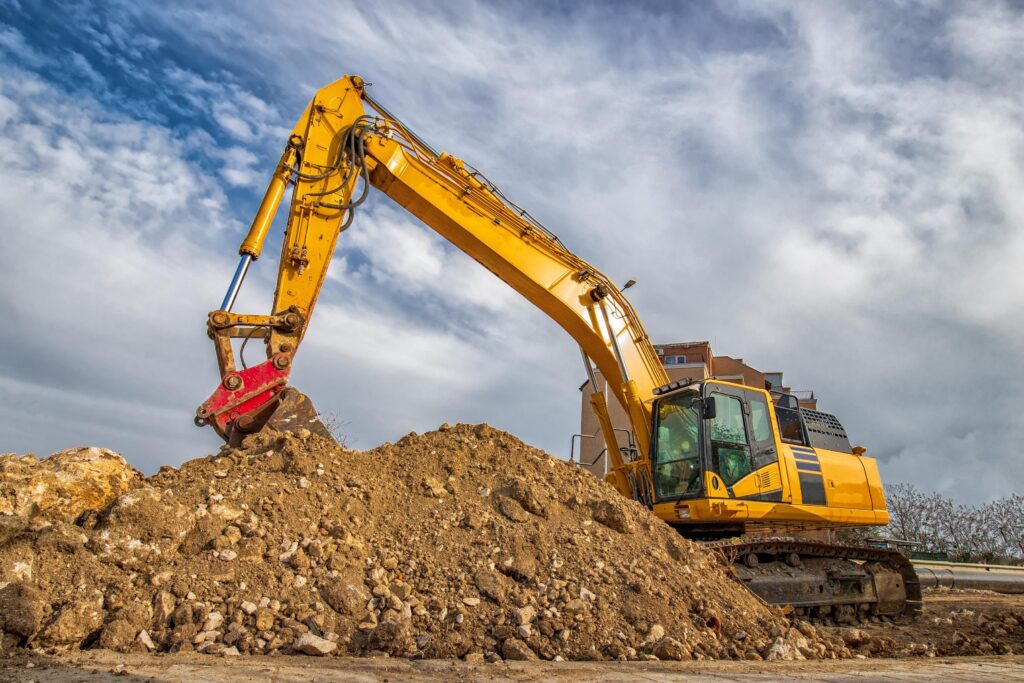
An excavator is hydraulic heavy equipment with a rotating cab, rotating house, boom, long arm, dipper and bucket, usually on tracks or wheels. Most excavators have 360° rotation and serious power for deep digging, heavy lifting, demolition and material handling.
Core parts include:
- Undercarriage: tracks or wheels, including crawler excavators and wheeled excavators.
- Upper carriage: the rotating house with engine, hydraulics and counterweight.
- Boom and arm: the long arm system for digging, lifting and reaching.
- Operator cab: the rotating cab for visibility and control.
Excavator types include short tail-swing models, zero tail-swing machines and long reach excavators. From 2015–2025, UK and European work, applications for excavators included road construction, flood defence, quarry work, urban basement digs, commercial foundations and the mining industry.
What Is a Digger?
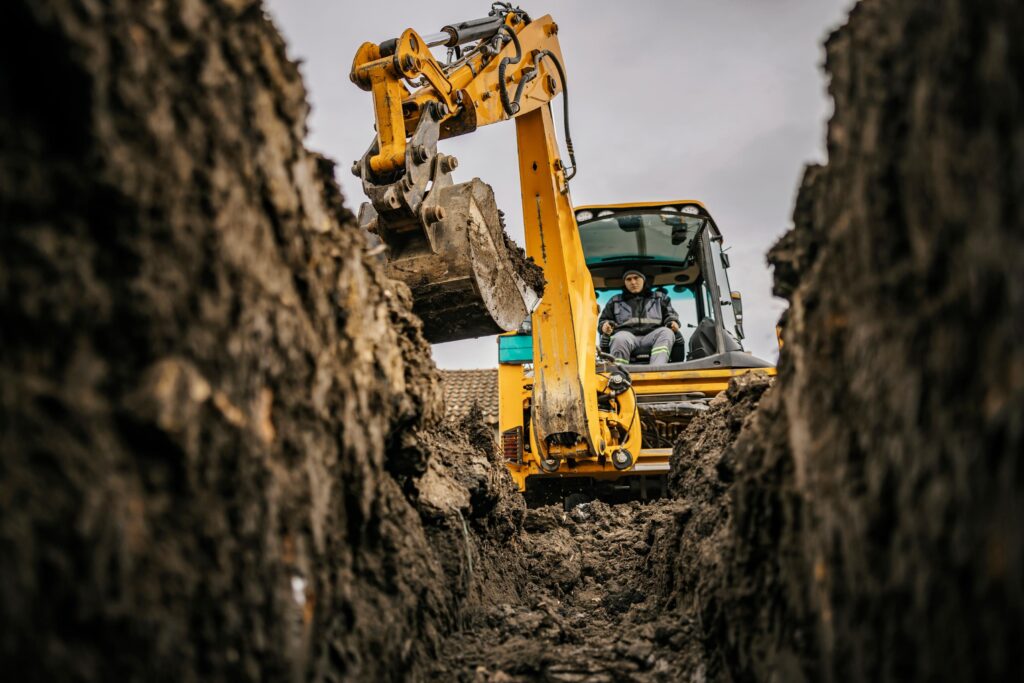
A digger is an informal or umbrella term, especially in the UK, Australia and New Zealand. On many sites, it means a mini digger or compact excavator.
- Mini diggers, micro diggers and smaller machines are often 0.8–8 tonnes and suit confined spaces.
- A micro excavator is useful in residential areas, tight spaces and confined areas.
- Diggers usually have a compact size and are suited to shallow trenches, utility installation and small projects.
- Plant catalogues may place mini diggers, backhoes and compact machines in the digger family.
- Asking for a “digger” without size, digging depth or undercarriage type creates ambiguity.
What Is the Difference Between a Digger and an Excavator?
So, what is the difference between a digger and an excavator? The main difference is terminology and context. “Excavator” is the engineering, procurement and safety term; “digger” is casual and broader.
- Specifications, training, certification and parts ordering normally use “excavator”.
- Digger vs excavator comparisons often mean compact machines versus larger machines.
- Excavators are generally larger and more powerful than diggers, making them suitable for heavy-duty tasks like deep excavation and demolition, while diggers are smaller and more agile, ideal for tasks in confined spaces.
- Diggers usually have a more compact design with a two-part arm, making them better suited for utility projects and smaller jobs.
- Compact diggers often have a reduced swing radius, approximately 200 degrees, limiting their pivoting range without moving the tracks.
Excavator vs Digger: Key Differences in Size, Power and Capability
Power and Size
Mini diggers, often 1–5 tonnes, use modest hydraulic power, around 15–30 kW, for light demolition, digging trenches and grading. Medium and large excavators, commonly 13–50+ tonnes, may use 100–250 kW for increased power, heavy-duty work and large-scale construction.
Tracked excavators offer superior grip and stability in muddy or uneven site conditions. Large crawler excavators bring more power, stability and breakout force for major construction projects.
Digging Depth and Reach
Digging depth is critical. Mini diggers often reach 2–3 m. Standard 20–25 tonne excavators can reach 6–7 m. Long-reach excavators can exceed 10–20 m depending on configuration.
Choose large excavators for deep excavation, quarry benches, riverbanks and basements. Choose diggers for driveways, shallow utility lines and localised digging.
Mobility, Access and Ground Impact
Mini diggers suit narrow gateways, older urban settings and finished gardens. A 1.7 tonne mini digger may pass through a garden gate; a 30 tonne excavator needs low-loader transport, firm haul roads and wider working space.
Smaller machines reduce surface damage. Larger machines may require mats and more planning.
Attachments and Multifunctionality
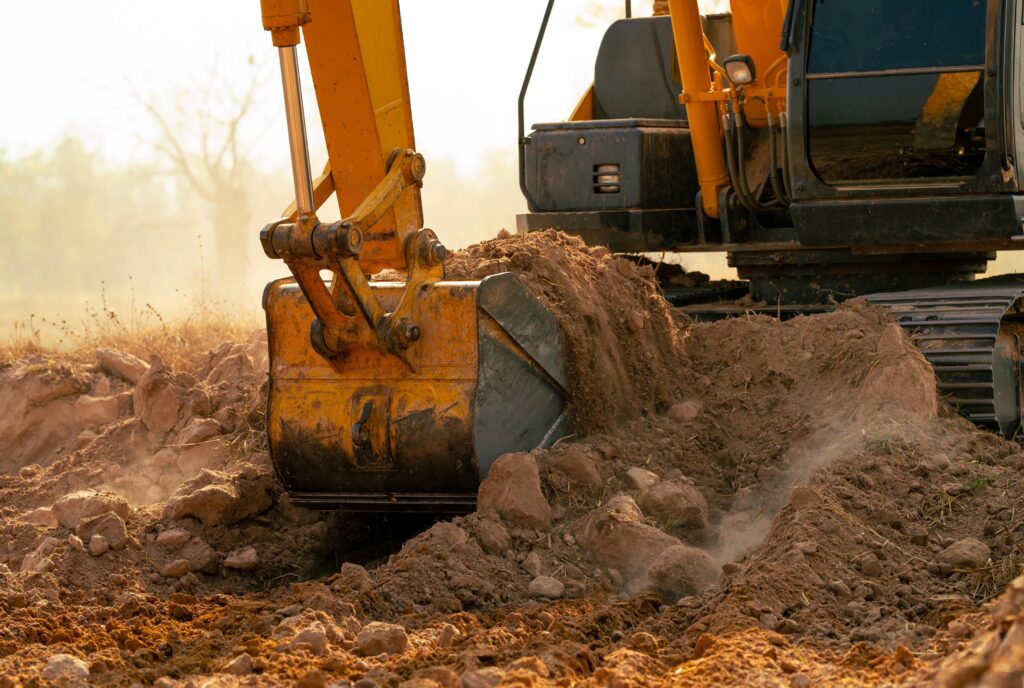
Excavators can be enhanced with augers for drilling, grapples for material handling, hydraulic breakers, pulverisers and shears, which significantly increase their versatility for specialised jobs. The versatility that excavators offer makes them a go-to machine on many sites.
Modern mini-diggers can accept some attachments like breakers, but they are primarily designed for dedicated digging and levelling tasks. Diggers, while having fewer attachments, are still multi-functional with a front loader for material handling and a backhoe for digging tasks, and some advanced models feature rotating attachments and tiltrotators for added flexibility.
Mini Diggers vs Large Excavators
Many two-machine comparisons are really mini diggers versus large excavators.
- Access: mini diggers win in tight spaces; heavy-duty machines win on open sites.
- Productivity: excavators move bulk material faster on large-scale projects.
- Cost: excavators can be an expensive investment, with new models costing hundreds of thousands of dollars, plus fuel consumption and annual maintenance costs.
- Budget: diggers are generally more economical than excavators, with lower fuel and maintenance costs.
- Hire: the used market for diggers is strong, and rental rates for diggers are usually lower than those for excavators.
- Use: mini diggers are cost-effective for short hire; large excavators suit long-term infrastructure.
Excavator Types and Configurations
There is no single excavator type. Different machines suit different projects.
Crawler Excavators
Crawler excavators dominate civil engineering, quarrying and demolition because tracks give traction, stability and low ground pressure.
Wheeled Excavators
Wheeled excavators are road-mobile machines for road, rail and utility work. They reduce damage on tarmac but lose performance on soft ground.
Short Swing and Zero Tail-Swing Excavators
These machines reduce rear overhang when rotating, improving safety near traffic, walls and structures.
Long Reach Excavators
Long reach excavators use extended booms for dredging, lagoon clearance, deep basements and tall demolition. They are ideal when reach is the limiting factor.
Applications for Diggers vs Applications for Excavators
Applications for Diggers
Applications for diggers include residential landscaping, clearing backyard debris, driveway reconstruction, breaking concrete, shallow trenches and utility installation. Utility projects benefit from diggers because they are efficient for trenching shallow water or electrical lines in tight urban areas.
Diggers excel in two-in-one tasks due to their front loaders, making them useful for scooping, loading dump trucks and backfilling trenches.
Applications for Excavators
Applications for excavators include bulk earthmoving, land clearing, fine grading, foundation work, heavy lifting, road construction, large-scale construction, deep excavation, demolition and industrial dismantling.
Excavators can handle multiple functions on construction sites, making them essential for land clearing, fine grading and heavy lifting. The machine’s versatility increases further with specialist attachments.
How to Choose the Right One for Your Project
Choose by scope, site size, material, budget and safety.
- Need shallow trenches, compact size and lower cost? Choose mini diggers.
- Need deep digging, reach, lifting or demolition power? Choose an excavator.
- Check ground conditions, overhead cables, site access and transport.
- Match the attachment set to the job: breaker, auger, grapple, grading bucket or loader bucket.
- Factor in operator competence, insurance, servicing and regulations.
- Get professional advice before committing to the right machine.
The choice between machines depends on the project’s scope, ground conditions and site size, with excavators suited for deep earthmoving and diggers for lighter tasks. The versatility of excavators and diggers allows them to be used in construction, landscaping, utility work and demolition.
Frequently Asked Questions
On private UK land, there is not usually a separate licence, but commercial sites normally require evidence of competence, such as CPCS or NPORS. Always check insurance and local rules.
A backhoe loader is a separate, versatile machine with a front loader bucket and rear excavating arm. Many people casually call it a digger, but it is not a dedicated excavator.
A mini digger can perform similar tasks on a smaller scale, but it lacks the power, digging depth and reach of large excavators. For bulk earthmoving or deep foundations, larger machines are safer and faster.
Many excavators exceed 8,000–12,000 operating hours with proper servicing, and some pass 15,000 hours. Hire-fleet mini diggers may wear faster, so inspection matters.
Sometimes, but compatibility is not automatic. Hydraulic flow, pressure, couplers and stability must match the machine and attachment manufacturer’s guidance.